
Carbs explained: simple vs complex
Carbohydrates fuel your brain and workouts. Choosing complex over simple keeps energy steady.
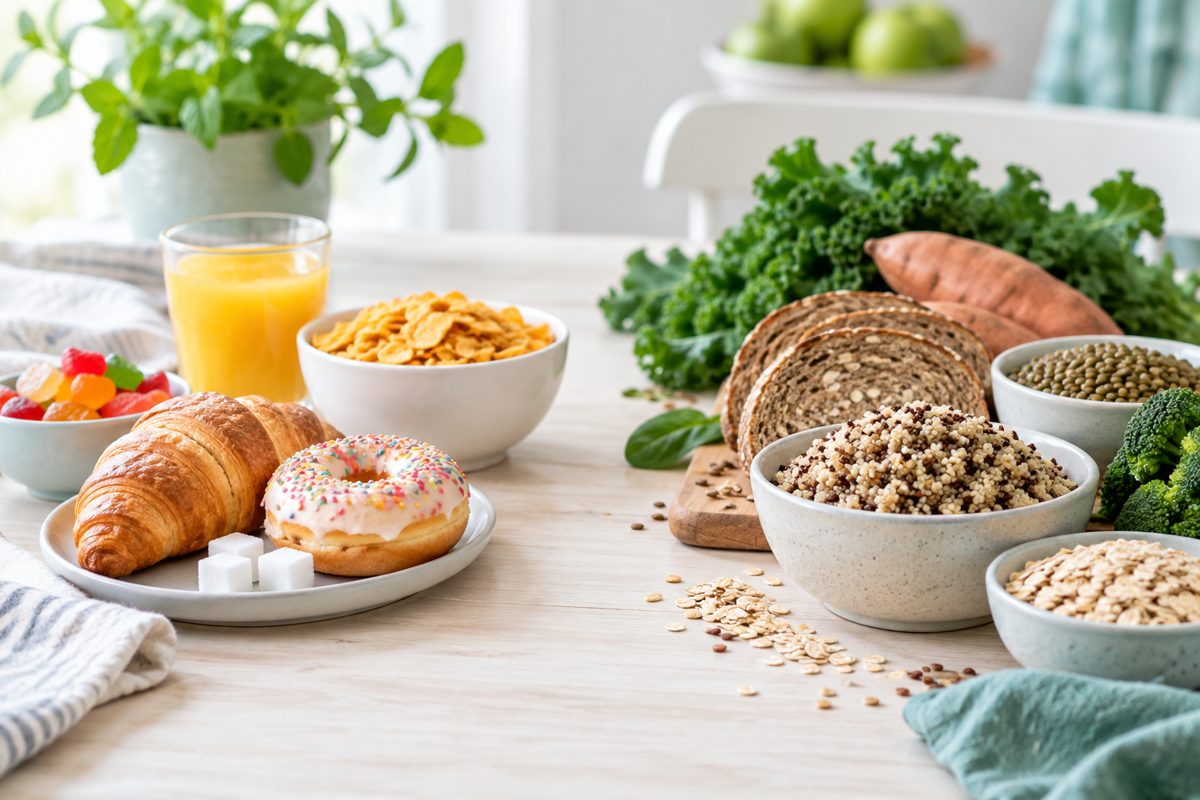
Carbs have had almost as bad a press as fat, but they matter too. Carbohydrates are the body's primary energy source — especially for the brain and during exercise.
Simple carbs
Simple carbs are fast energy. They are found in sugary drinks, sweets and pastries and cause rapid blood-sugar spikes followed by crashes that trigger more cravings.
Complex carbs
- Quinoa
- Whole-grain rice and bread
- Oats
- Lentils and beans
- Buckwheat
- Vegetables
Complex carbs give a steady supply of energy plus fibre and a long list of beneficial nutrients — a much more sustainable approach than the restrictive low-carb diets that come and go.
Glycaemic index and load in plain language
Glycaemic index (GI) ranks foods by how quickly they raise blood sugar, while glycaemic load (GL) adjusts for portion size — and GL is usually the more useful number. Watermelon has a high GI but a tiny GL because a slice contains so little carbohydrate. White rice has a high GI and a high GL, which is why it spikes energy and crashes it fast. Pairing carbs with protein, fat or fibre flattens the curve dramatically: rice with chicken and broccoli behaves nothing like rice on its own, and a piece of fruit eaten with yoghurt produces a far gentler glucose response than juice alone.
A practical rule of thumb is to almost never eat a fast carb naked. Bread becomes an avocado-and-egg sandwich, pasta becomes a bolognese with extra vegetables, banana becomes a smoothie with skyr and nut butter. Photograph the full plate in Nutraware and you'll see how the macros shift — and feel the difference in your afternoon focus.
Timing also matters. Most people tolerate carbs best around physical activity — a bowl of oats before a morning run or pasta with a generous protein source after strength training gives the body fuel exactly when it's hungry for it. Evening carbs aren't the villain they were once made out to be either: a moderate serving with dinner can improve sleep quality via tryptophan transport and serotonin synthesis. The pattern that backfires is constant, low-effort carb snacking with no protein in sight — that is what flattens energy and feeds afternoon cravings.
Want to put this into practice? Nutraware lets you photograph your meals for an instant nutritional analysis, track your habits and get personal coaching from an AI built on science. Be aware, feel great — and let the app do the counting for you.