
How much protein do you actually need?
From sedentary to active: a simple gram-per-kilo guide and a 78-gram day spelled out meal by meal.
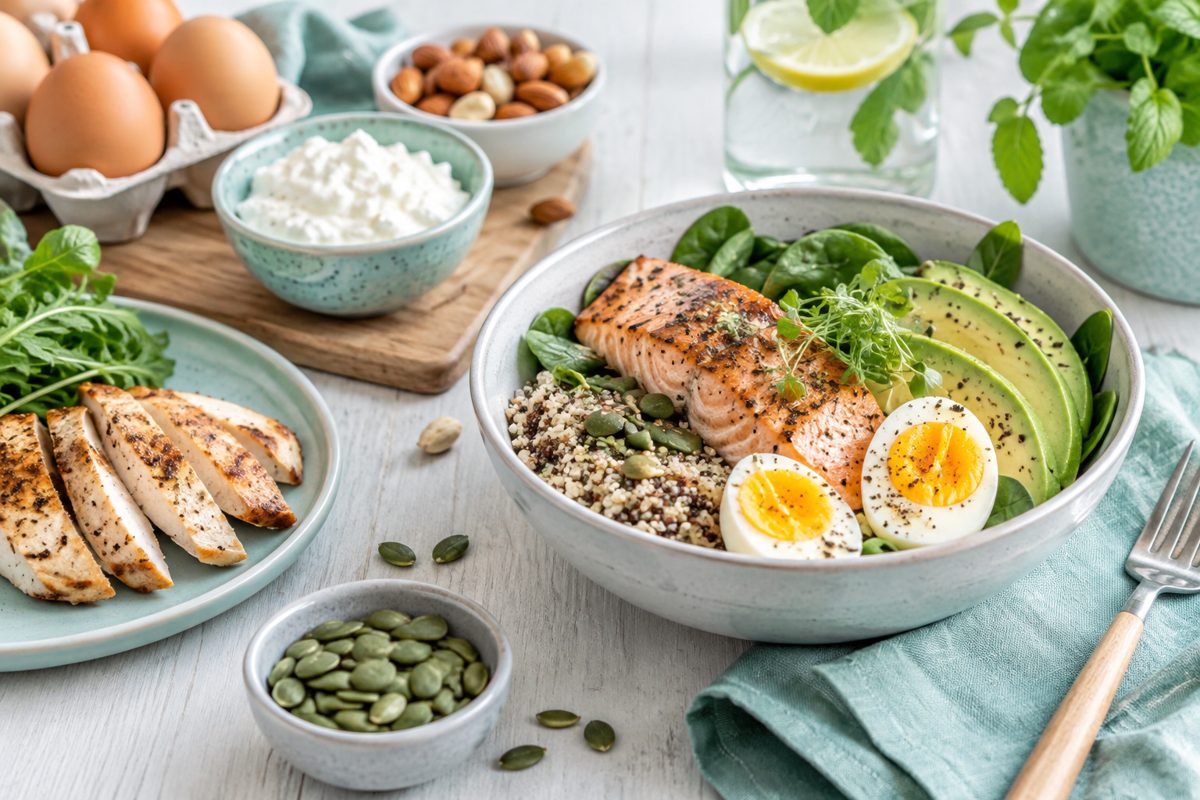
Protein needs vary with age, activity level and goals such as weight loss or muscle building. The baseline recommendation for an average adult is 0.8 g protein per kg body weight. If you are active or train regularly, the need rises to 1.2–2.0 g per kg.
A 78-gram protein day
If you weigh 60 kg and train regularly, around 1.3 g/kg is reasonable — that's 78 g of protein over a day.
- Breakfast: 1.5 dl oats with 3 dl semi-skimmed milk + 1 boiled egg — 18 g
- Lunch: 150 g chicken breast + 1 dl quinoa + steamed broccoli — 39 g
- Snack: 200 g quark + a small handful of nuts — 29 g
- Dinner: 100 g salmon + 150 g cooked lentils + spinach salad — 36 g
- Optional evening: a glass of milk + a boiled egg — 13 g
Don't want to do the arithmetic? Photograph the meal in Nutraware and let the AI estimate protein, carbs and fat in seconds. Be aware, feel great.
Adjusting your number for goals and age
The 0.8 g/kg recommendation is a floor designed to prevent deficiency, not a target for thriving. Most modern nutrition research lands closer to 1.2–1.6 g/kg for generally active adults, 1.6–2.2 g/kg for people in a fat-loss phase (protein preserves lean mass when calories drop) and 1.6–2.0 g/kg for those building muscle. Adults over sixty benefit from the higher end of that range because protein utilisation becomes less efficient with age — a phenomenon called anabolic resistance — and sarcopenia is one of the strongest predictors of frailty.
Practical example: a 75 kg adult in a mild deficit aiming to keep muscle should target around 130–150 g of protein a day, split across four eating occasions of 30–40 g each. That sounds like a lot until you photograph a Greek yoghurt breakfast, a chicken-and-quinoa lunch, a tuna-and-cottage-cheese snack and a salmon dinner — Nutraware will show you that you sailed past the goal without measuring a thing.
A simple sanity check: if you struggle to reach the target from food alone, a scoop of whey or a plant-based protein in your morning yoghurt or oats closes 20–25 g in seconds without changing the meal. Older adults, anyone recovering from injury and women going through menopause typically benefit from being on the higher end of the range — not because protein is magic but because tissue turnover speeds up exactly when most diets quietly drop calories and protein at the same time.
Want to put this into practice? Nutraware lets you photograph your meals for an instant nutritional analysis, track your habits and get personal coaching from an AI built on science. Be aware, feel great — and let the app do the counting for you.