
Omega-3 and why it matters for inflammation
Two portions of oily fish a week is one of the highest-leverage diet changes most people can make.
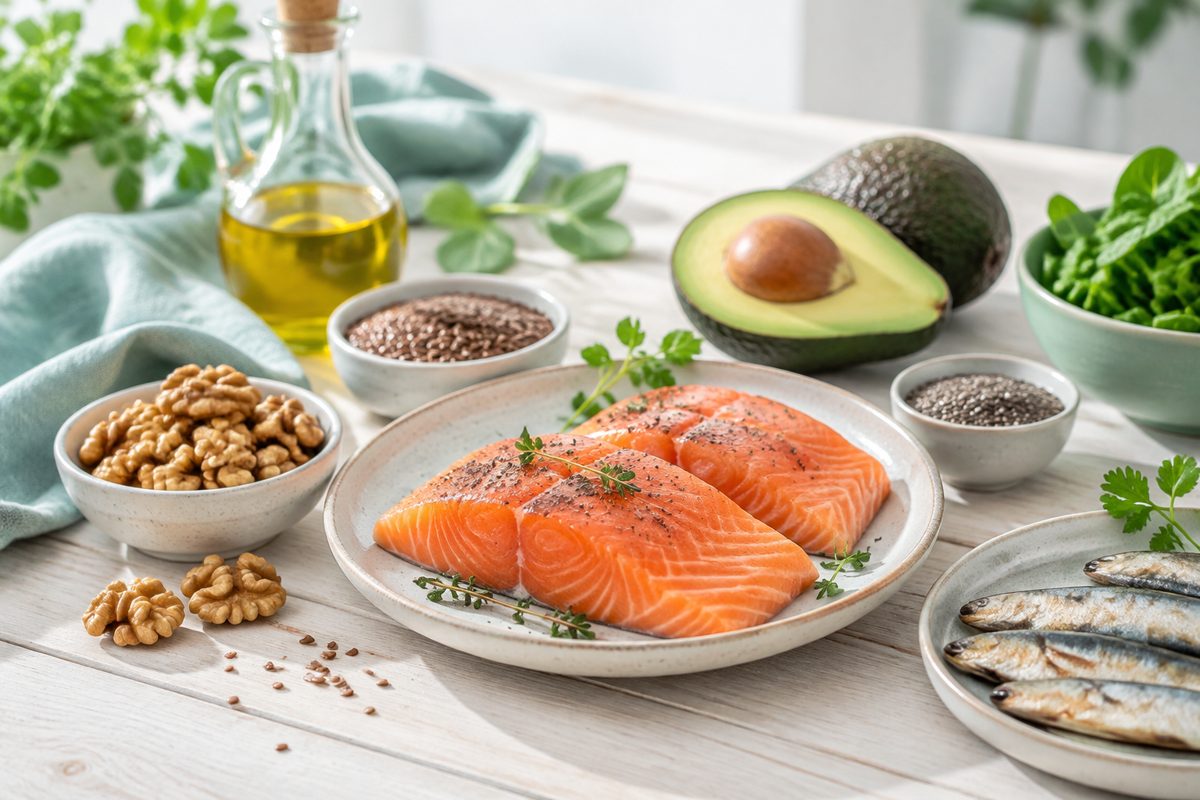
Omega-3 fatty acids — especially EPA and DHA from oily fish — improve blood pressure, support brain health and reduce inflammation linked to heart disease. Two portions a week of salmon, mackerel, herring or sardines is a strong baseline.
Don't like fish? Walnuts, chia and flaxseeds give you ALA, the plant form of omega-3, but the conversion to EPA/DHA is limited — many vegetarians choose an algae-based supplement.
Daily EPA + DHA targets and which sources actually deliver
European public-health bodies recommend at least 250–500 mg of combined EPA and DHA per day for general health, with higher amounts (1,000+ mg) linked to additional cardiovascular benefit in people with elevated triglycerides. Two portions of oily fish per week comfortably cover the baseline: a 100 g portion of farmed salmon contains roughly 1,800 mg, herring around 1,700 mg, mackerel about 2,500 mg, sardines around 1,500 mg. White fish like cod and pollock contain almost no omega-3, so 'fish twice a week' only works as advice if at least one of those portions is an oily species.
If supplements make more sense than fish, look at the actual EPA + DHA content on the back of the bottle — not the total fish-oil number — and pick an algae-based option if you're vegetarian. Refrigerate fish oil to prevent rancidity, take it with a meal that contains fat for absorption, and treat omega-3 as a long game: blood markers of intake stabilise after about three months, not three days. Nutraware tags meals that contributed oily fish so you can confirm the weekly pattern at a glance.
Want to put this into practice? Nutraware lets you photograph your meals for an instant nutritional analysis, track your habits and get personal coaching from an AI built on science. Be aware, feel great — and let the app do the counting for you.