
Why photographing your food beats manual logging
Manual food diaries fail because they cost time and willpower. A photo costs neither.
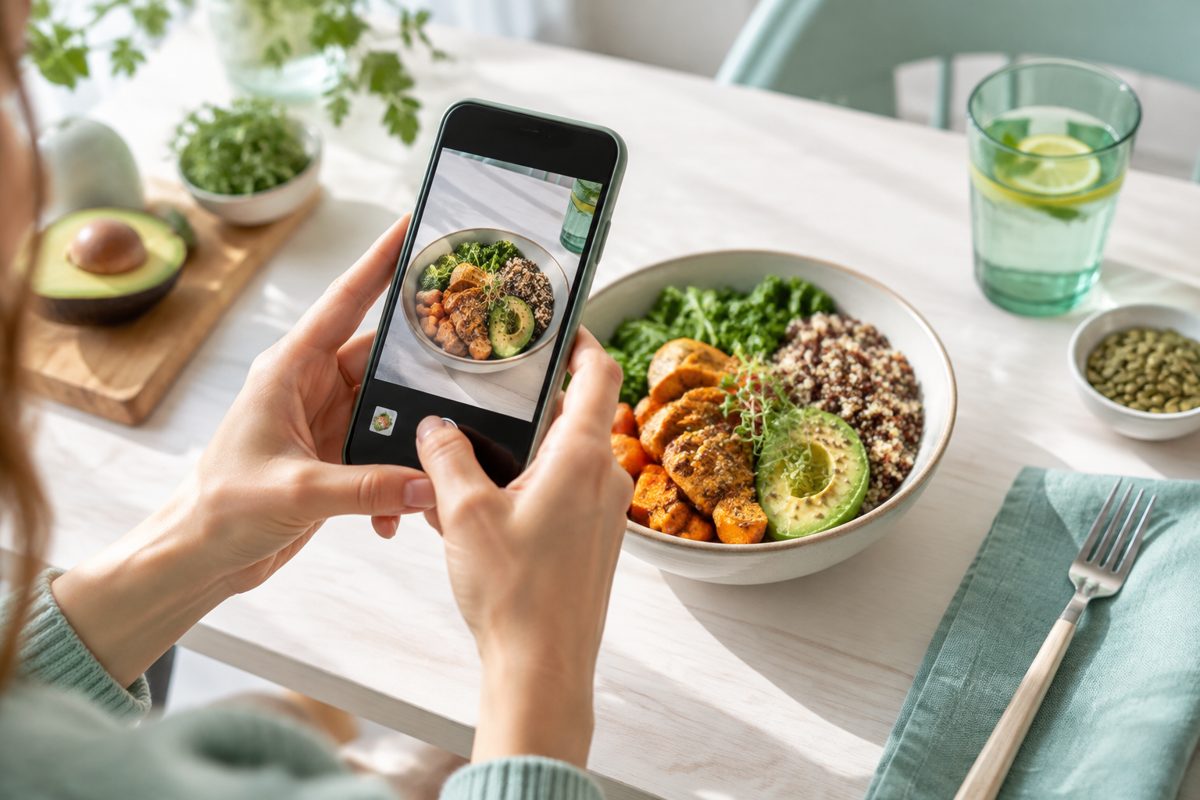
Most people who try a food diary give up within two weeks. Not because they don't care — but because logging every gram is genuinely tedious. The friction wins.
Nutraware removes the friction. Photograph the plate and the AI estimates calories, protein, carbs and fat in seconds. No weighing, no scrolling through food databases, no entries to correct.
The point is awareness, not perfection. When you can see your week at a glance you make better choices the next week — without ever counting a calorie by hand.
How AI food recognition actually works
Modern food-recognition AI is a vision model trained on millions of labelled food images alongside a large language model that reasons about ingredients, cooking methods and likely portion sizes. When you photograph a plate, the model identifies items, estimates volumes from visual cues like plate size and depth, and looks up nutrient values from curated food databases. The result is rarely perfect to the gram — it doesn't need to be. Studies on AI versus manual food logging consistently find AI within ten to fifteen percent of weighed-and-measured truth, which is more than accurate enough for behaviour change and well inside the noise of self-reported manual logs.
Photographing also captures things manual logging routinely misses: the splash of dressing, the second piece of bread, the spoon of peanut butter straight from the jar. That richer data is what turns a food log from a guilt machine into a useful pattern detector. Nutraware lets you correct the AI estimate with one tap if it gets something wrong, and learns your typical portions over time.
Want to put this into practice? Nutraware lets you photograph your meals for an instant nutritional analysis, track your habits and get personal coaching from an AI built on science. Be aware, feel great — and let the app do the counting for you.