
Getting enough protein on a plant-based plate
You can absolutely hit your protein target without meat. It just takes a slightly more intentional plate.
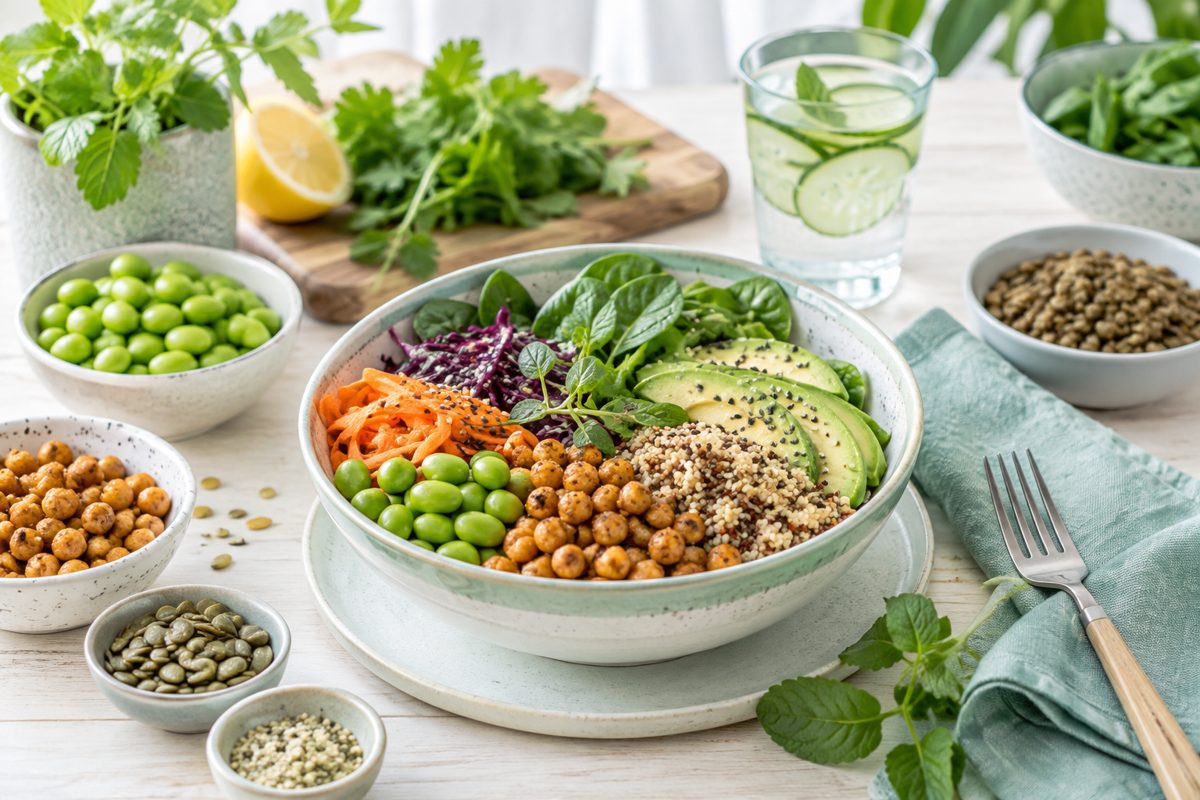
- Lentils — about 9 g protein per 100 g cooked
- Chickpeas — about 8 g per 100 g cooked
- Tofu — 12–15 g per 100 g
- Tempeh — about 19 g per 100 g
- Quinoa — 4–5 g per 100 g cooked
- Edamame — about 11 g per 100 g
Build a plate around two of these and you are usually past 20 g protein without trying. Nutraware tells you instantly when the photo lands.
Combining proteins and the amino-acid myth
The old advice to combine plant proteins at every meal (rice with beans, hummus with pita) came from a 1971 book and was retracted by the author a decade later. Modern nutrition recognises that the body maintains an amino-acid pool from everything you've eaten over the day, so as long as your daily intake includes a variety of plant sources, you cover the full essential amino acid profile without engineering each meal. The real plant-based priorities are total grams, leucine content (lower in plants — slightly higher portions help) and B12 from fortified foods or a supplement.
Plant proteins also bring fibre, micronutrients and phytochemicals that animal protein lacks, which is why studies consistently link higher plant-protein intake with lower cardiovascular risk. Aim for variety across the week — legumes, soy products, whole grains, nuts and seeds — and a per-meal target of 20–25 g protein. Nutraware's photo log makes it easy to spot whether the legumes actually show up across your week or only on the days you remember to try.
Want to put this into practice? Nutraware lets you photograph your meals for an instant nutritional analysis, track your habits and get personal coaching from an AI built on science. Be aware, feel great — and let the app do the counting for you.