
How much protein do you need per day?
How much protein do you need per day? Learn about protein needs for exercise, weight loss and older age, and which foods contain the most protein.
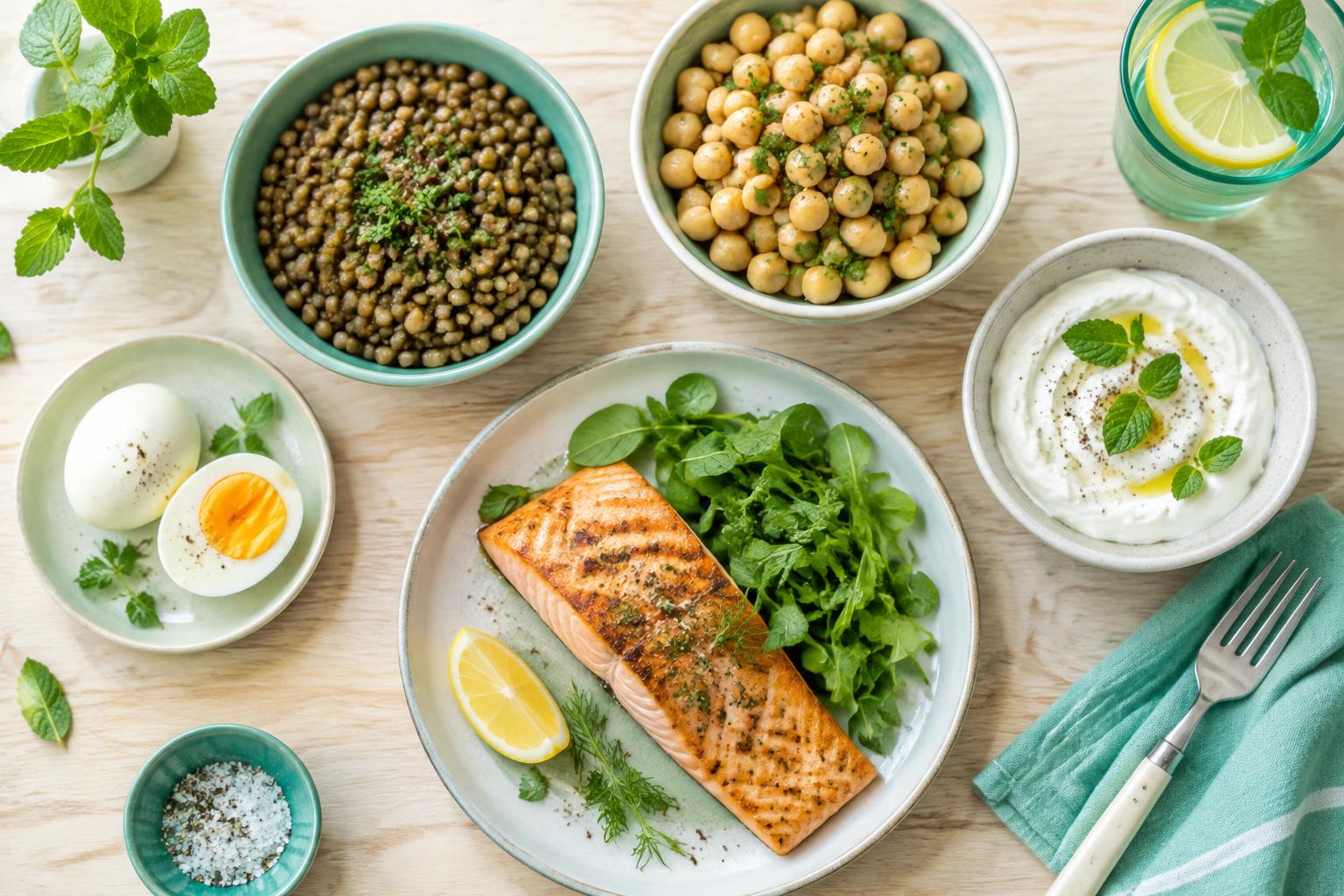
Protein is one of the body's most important nutrients. Among other things, it is needed to build and maintain muscle, repair tissues and produce enzymes and hormones. But how much protein do you actually need each day? And do you need extra protein if you exercise or want to lose weight?
There is plenty of advice about protein, but your needs vary depending on factors such as age, body weight, physical activity and health. For most people, it is not about eating as much protein as possible, but about getting the right amount as part of a varied diet.
How much protein do you need per day?
According to the Nordic Nutrition Recommendations (NNR 2023), the recommended protein intake for healthy adults is approximately 0.83 grams of protein per kilogram of body weight per day. For adults, this usually corresponds to around 10–20 per cent of total energy intake.
This means, for example, that a person weighing 70 kilograms needs around 58 grams of protein per day to meet their basic needs. However, it is important to distinguish between the amount recommended to meet the body's needs and the amount that may be appropriate for activities such as strength training or during weight loss.
| Body weight | Protein per day (0.83 g/kg) |
|---|---|
| 50 kg | 42 g |
| 60 kg | 50 g |
| 70 kg | 58 g |
| 80 kg | 66 g |
| 90 kg | 75 g |
| 100 kg | 83 g |
The table shows approximate amounts for healthy adults. For people who are significantly overweight, have certain medical conditions or have specific training goals, it may be more appropriate to use an individually adjusted weight or a different protein target.
Why does the body need protein?
Protein is made up of amino acids that the body uses to build and maintain tissues. The body can produce some amino acids itself, while others are essential and must come from food.
Protein has several important functions. It helps build and maintain muscle mass, is needed for the immune system to function and forms part of many of the body's hormones and enzymes. Protein is also important for the body's ability to repair and renew cells and tissues.
Because the body is constantly breaking down and building proteins, we need to get protein regularly through our diet.
How much protein do you need if you exercise?
People who exercise regularly, particularly those who do strength training, may benefit from a higher protein intake than the basic recommended amount.
For many healthy people who exercise to build or maintain muscle mass, an intake of around 1.4–2.0 grams of protein per kilogram of body weight per day is a common, evidence-based guideline. Your exact needs depend on factors such as training volume, energy intake and individual circumstances.
For example, a person weighing 70 kilograms who regularly does strength training could aim for around 100–140 grams of protein per day.
However, this does not mean that everyone who exercises needs to eat this much. For those who mainly walk, cycle or exercise a few times a week for their health, a normal, varied diet can often meet their protein needs.
Do you need to eat protein straight after exercise?
The most important thing is to get enough protein over the course of the day. Eating protein around the time you exercise can be practical, but most people do not need to consume it within a very short window. Spreading your protein intake across your daily meals can be a good way to give your body access to the amino acids it needs.
How much protein do you need when losing weight?
When you lose weight, the aim is often to reduce body fat while preserving as much muscle mass as possible. Because your body is in an energy deficit, getting enough protein can be particularly important.
Protein can help you feel fuller and, alongside exercise, especially strength training, helps preserve muscle mass during weight loss.
For many healthy adults who want to lose weight, an intake of around 1.2–1.6 grams of protein per kilogram of body weight per day can be a useful guideline, but needs vary. For people who are significantly overweight, the amount should not automatically be calculated using their full current body weight.
It is also important to remember that protein does not cause weight loss on its own. To lose weight, your body still needs to be in an energy deficit over time. However, protein-rich foods can make it easier to feel full and maintain muscle mass during the process.
Do older people need more protein?
Yes, protein needs change with age. According to NNR 2023, older adults aged 65 and over are recommended to have a higher protein intake, around 1.2–1.5 grams per kilogram of body weight per day.
One reason is that the muscles' ability to respond to protein and physical activity changes as we get older. At the same time, the risk of losing muscle mass and strength increases.
For older people, both getting enough protein and regular physical activity, ideally including strength training, are therefore important for maintaining muscle health and function. Certain conditions, such as kidney disease, may require specific recommendations, in which case protein intake should be adjusted with guidance from a healthcare professional.
Which foods contain the most protein?
Protein is found in both animal and plant foods. You do not need to eat meat or use protein powder to get enough. Here are some examples of protein-rich foods and their approximate protein content per 100 grams:
| Food | Protein per 100 g |
|---|---|
| Chicken breast, cooked | 30–31 g |
| Tuna, drained | 24–26 g |
| Salmon, cooked | 20–23 g |
| Eggs | 12–13 g |
| Plain quark | 10–12 g |
| Tofu | 8–17 g |
| Lentils, cooked | 8–10 g |
| Chickpeas, cooked | 7–9 g |
| Rolled oats, dry | 12–14 g |
These values are approximate and vary depending on the product, preparation and water content. To compare foods fairly, it is important to distinguish between raw and cooked weight.
Combining different protein sources can help you achieve a varied diet that also provides other important nutrients, such as fibre, vitamins and minerals.
How can you get enough protein throughout the day?
An easy way to meet your protein needs is to include a protein source in each main meal. At breakfast, this could be eggs, quark, yoghurt or rolled oats. At lunch and dinner, fish, chicken, tofu, beans or lentils can provide protein. Snacks can also help spread your intake throughout the day.
It does not need to be complicated. By looking at your usual meals, you can often spot any that contain very little protein and make small adjustments.
Do you need protein powder to get enough protein?
No, most people can meet their protein needs through everyday foods. Protein powder can be a convenient supplement for those who struggle to get enough protein or need an easy option after exercise.
However, protein from powder is not automatically better than protein from everyday foods. Food also often provides other nutrients the body needs. For most people, it therefore makes sense to focus primarily on a varied diet and treat any supplements as just that: a supplement.
Can you eat too much protein?
A protein intake that exceeds the body's needs does not automatically lead to bigger muscles or better results. The body also needs enough energy, carbohydrates, fat, fibre, vitamins and minerals.
For healthy adults, protein intakes within the ranges commonly recommended for exercise are generally well tolerated. However, less is known about the effects of very high intakes over long periods.
Focusing too heavily on protein can also leave too little room for other important parts of your diet. People with kidney disease or other medical conditions may need individual advice.
How do you know if you are getting enough protein?
It is easy to overestimate or underestimate how much protein food contains. A meal may look protein-rich without providing very much protein, while other meals may contain more than you think.
Becoming more aware of the nutritional content of your food can make it easier to see whether you are meeting your protein needs and how your intake is spread throughout the day. This is particularly useful if you exercise regularly, want to lose weight or are trying to change your eating habits.
Get a clearer picture of your protein intake with Nutraware
Knowing how much protein you need is a good start. The next step is to understand how much protein you actually get and what your eating habits look like over time.
With Nutraware, you can photograph your food and get an estimate of its calories and nutritional content, including protein, carbohydrates, fat and fibre. This makes it easier to see whether your meals contain enough protein and identify where you can make small improvements.
Nutraware's AI coach can also help you understand your eating patterns and provide personalised guidance based on your goals. The app also offers recipes, meal planning and information to help you create a more balanced diet.
You do not need to aim for a perfect protein intake every day. The most important thing is to find eating habits that fit your everyday life and give your body what it needs.
Want to know if you are getting enough protein? Discover Nutraware and get a clearer picture of what your food actually contains.
Be aware, feel great.
Scientific sources
Nordic Nutrition Recommendations 2023: https://pub.norden.org/nord2023-003/
Jäger et al. (2017), Protein and Exercise: https://pubmed.ncbi.nlm.nih.gov/28642676/
Morton et al. (2018), Protein supplementation and resistance training: https://pubmed.ncbi.nlm.nih.gov/28698222/